Tile Underlayment Replacement
Lift the tile, replace the worn underlayment, re-lay the same tile.
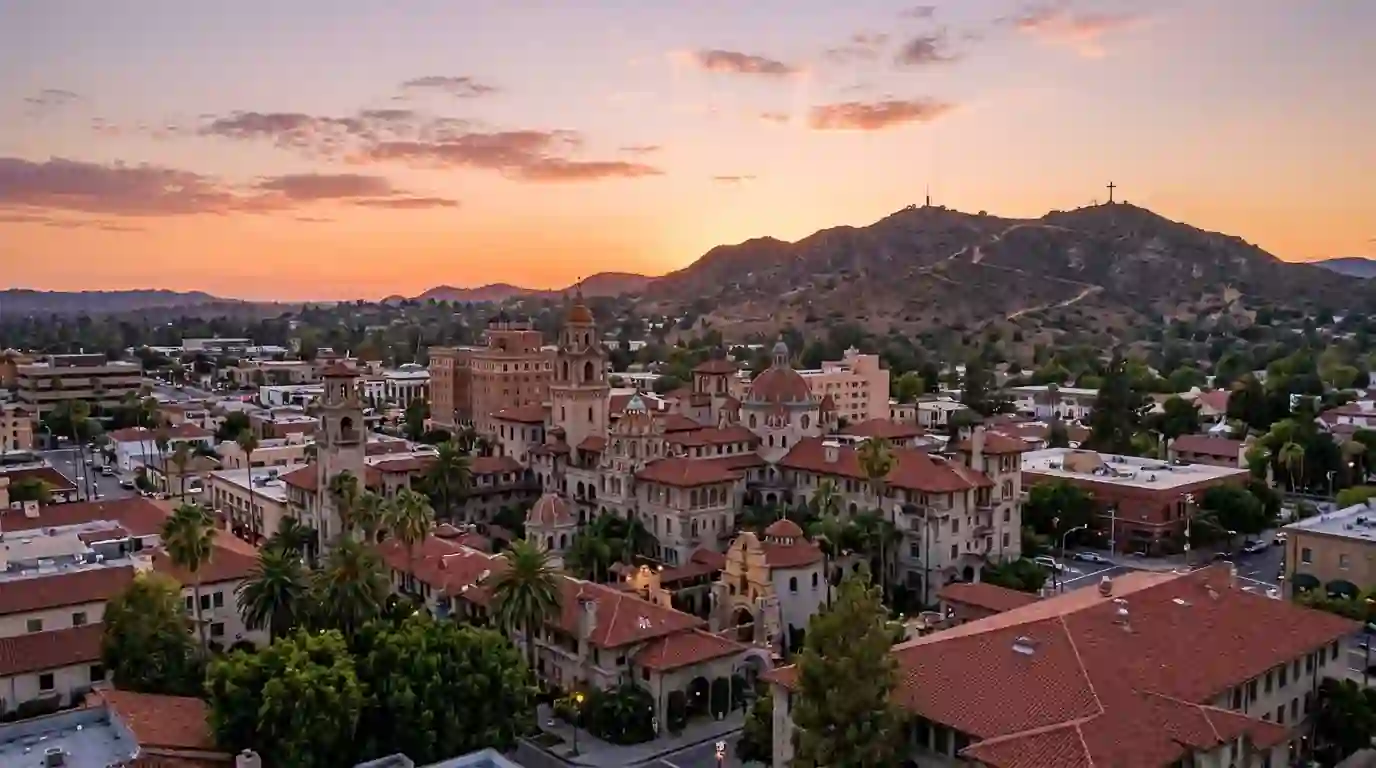
Learn moreRiverside is home base. Our office sits downtown on 10th Street, a few blocks from the Mission Inn, and our crews work every Riverside neighborhood from La Sierra to Sycamore Canyon and from the Northside to Orangecrest.
Local roof notes
The city's roofs tell its history: clay tile on Mission Revival and Spanish homes near downtown, shingle on the postwar ranch homes of Arlington and Ramona, and concrete tile across the 1980s and 1990s tracts of Canyon Crest, Mission Grove and Orangecrest. Underlayment that has dried out beneath concrete tile is the single most common major problem we find here, followed by wind-lifted tile after Santa Ana nights and cracked pipe boots on sun-baked slopes. Domino Roofing crews work here every week, and the roofs near the Mission Inn and the Raincross symbol that started there are ones we know well.
In Riverside we plan for wind. Any tile we reset gets fastened to current standards, and mortar-set ridges that keep cracking are good candidates for a fastened ridge system.
Because Riverside sits close to open hills or brush, we pay extra attention to ember entry points: attic and eave vents, the open ends of tile at the eaves, and dry debris in gutters and valleys. A Class A roof assembly is the baseline when we re-roof here.
Heat ages roofs in Riverside faster than rain does. South and west slopes go first: brittle felt under tile, split pipe boots and shingles that lose granules.
Other common calls from Riverside: tile roof repair, roof leak repair.
Most requested here
These come up most often in Riverside. Every other service we offer is available here too.
Lift the tile, replace the worn underlayment, re-lay the same tile.
Learn moreCracked, slipped and broken clay or concrete tiles replaced and secured.
Learn moreWe trace the water to where it actually enters and stop it there.
Learn moreWind-lifted tile, torn shingles and limb damage repaired and documented.
Learn moreComplete tear-off and new roof, with the permit and inspection handled.
Learn more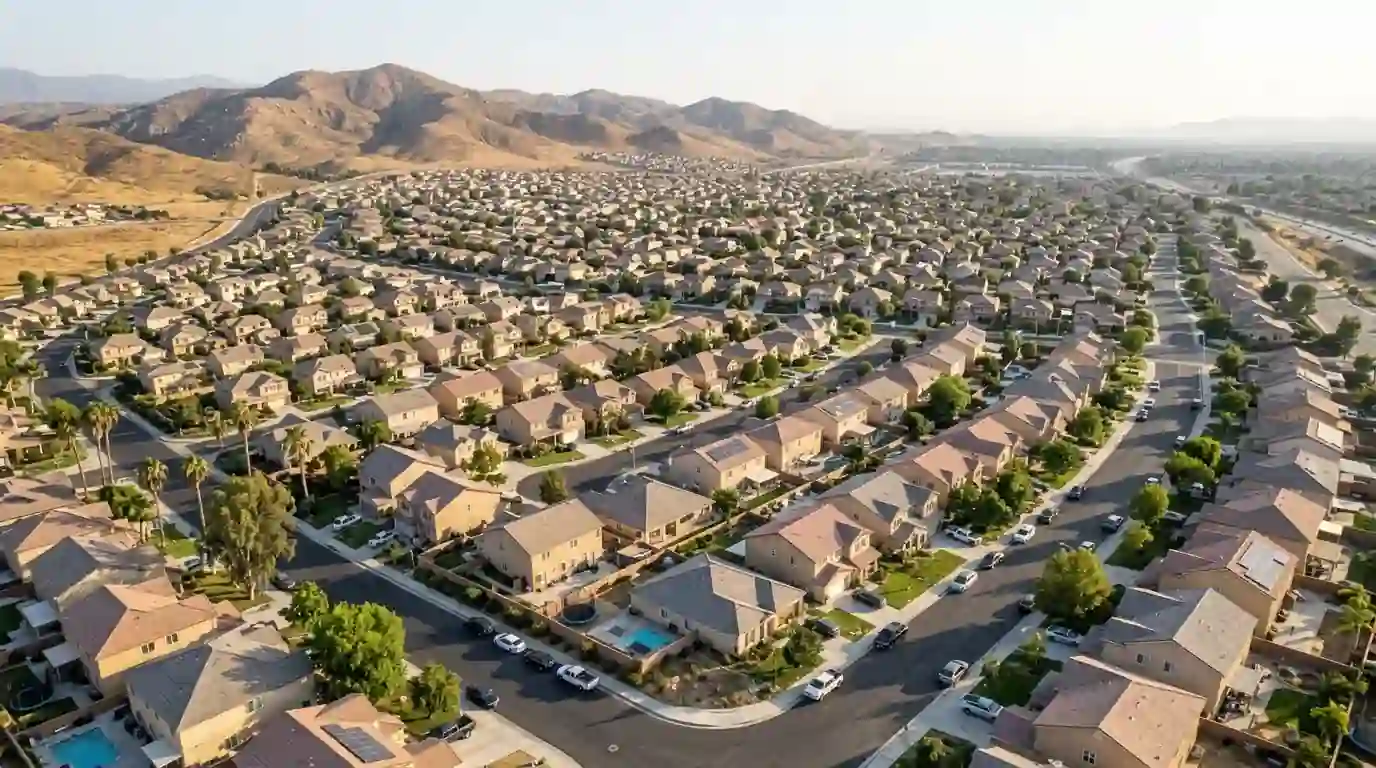
Roof type
The 1980s to 2000s neighborhoods of Orangecrest, Mission Grove, Canyon Crest, Corona and Moreno Valley wear concrete S-tile. The tile usually outlives the felt underneath it, so underlayment replacement is the big job here.
Neighborhood guides
Each page covers the roofs, ZIP codes and common problems in that part of the city.
Two-story tract homes from builders who used the same tile profiles street after street, many now 25 to 35 years old.
Open the pageSplit-level and hillside homes, many with mixed roofs where a low-slope section meets tile or shingle.
Open the pageConcrete tile homes in coordinated colors, many governed by HOA architectural guidelines.
Open the pageSingle-story ranch homes with shingle or early concrete tile, plus newer two-story homes.
Open the pageA mix of ranch homes and 1980s to 2000s tracts.
Open the page1950s and 1960s single-story homes, many with original low-slope sections and later shingle roofs.
Open the pagePostwar ranch homes, older bungalows and some 1920s and 1930s houses near the old village center.
Open the pageSingle-story homes with shingle roofs, patio covers and garage conversions.
Open the pageCustom homes and ranch estates, many with clay or concrete tile and long eaves.
Open the pageCustom homes from the 1960s onward, often with clay tile, concrete tile or older wood roofs that have been replaced.
Open the pageLarger custom homes, often with complex tile roofs and multiple ridges.
Open the pageHistoric homes, Spanish and Mission Revival houses and later ranch homes along the avenue.
Open the pageHistoric homes with clay tile, original rafter tails and older board sheathing.
Open the page1920s to 1960s homes, small apartment buildings and storefronts with low-slope roofs.
Open the page1950s and 1960s ranch homes with shingle roofs and patio covers.
Open the pageSmall older homes, many expanded over the years with additions and patio roofs.
Open the pageSingle-story homes, mostly shingle roofed, many with solar added in recent years.
Open the page1980s to 2000s concrete tile homes and townhome communities near open space.
Open the pageBungalows and small homes from the early and mid 1900s, many with older board sheathing.
Open the pageCustom and semi-custom homes on hillside lots, mostly tile roofed.
Open the pageHistoric homes, small apartment buildings and storefronts, many with clay tile, parapets or flat roofs.
Open the pageOlder bungalows and mid-century homes, many with shingle roofs and add-on rooms.
Open the page1950s and 1960s homes, rentals and small multifamily buildings.
Open the pageFAQ
Answers specific to Riverside.
Riverside is close to our 10th Street office, so a crew can often be on site within an hour for emergencies and within a day or two for repairs.
Underlayment that has dried out beneath concrete tile is the single most common major problem we find here, followed by wind-lifted tile after Santa Ana nights and cracked pipe boots on sun-baked slopes. The services we do most here are tile underlayment replacement, tile roof repair, roof leak repair.
Yes. The City of Riverside Building and Safety Division requires a permit and inspection for re-roofing in Riverside. We pull the permit, choose a cool-rated product that meets climate zone 10 rules, and meet the inspector.
Call any hour. A person answers, and our own crew comes out.