Why these winds are different
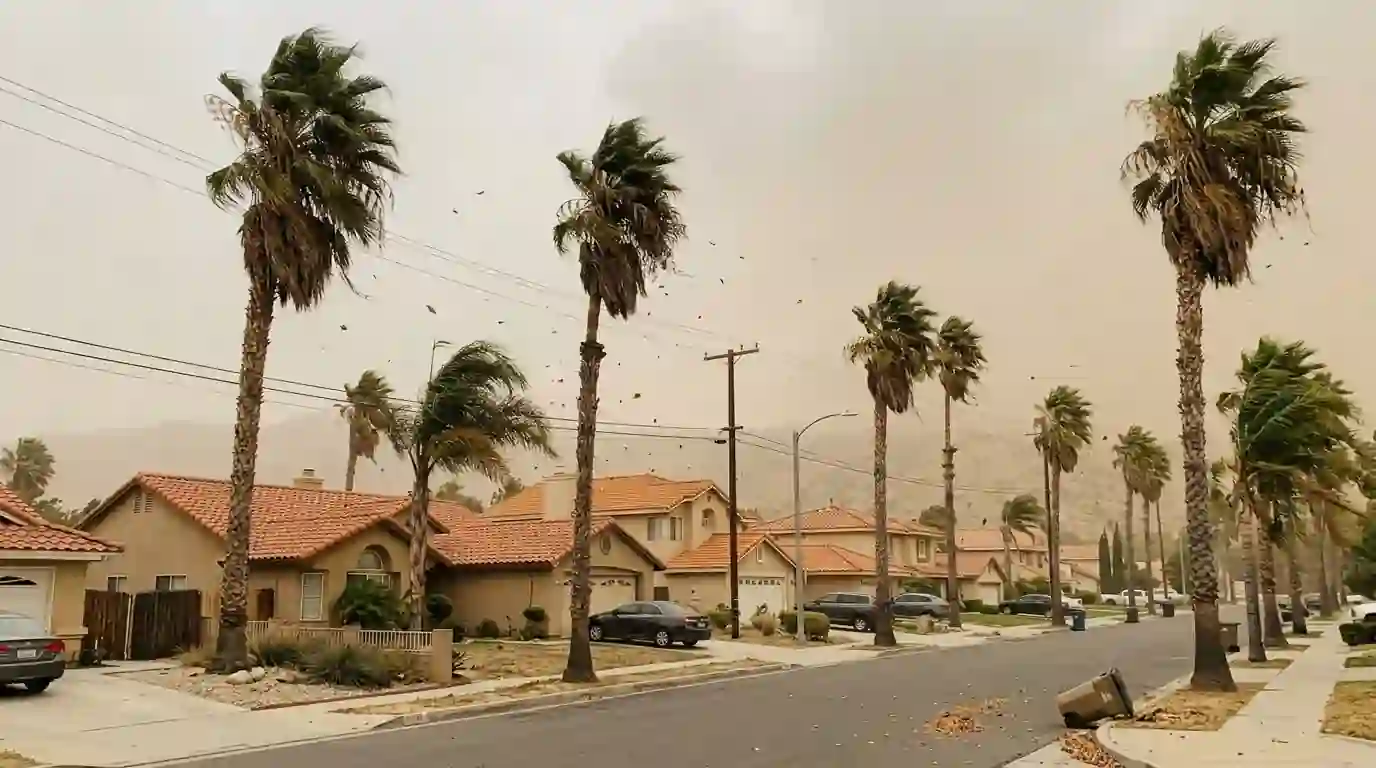
Santa Ana winds are dry, warm winds that pour out of the high desert through the Cajon Pass and the canyons of the San Gabriel and Santa Ana Mountains, usually between October and March. In Riverside, Fontana, Rialto and Jurupa Valley, gusts of 40 to 60 miles per hour are common during strong events, and higher on exposed ridges.
Unlike a winter storm, a Santa Ana event usually brings no rain. That is the problem. A roof can lose tiles, crack ridge caps or have shingle seals torn loose, and nobody notices until the first storm of winter finds the opening weeks later.
How wind moves tile
Wind does not push tiles off a roof so much as pull them up. Air racing over the ridge and around the eaves creates lift, the same way a wing works. Tiles at the rakes, eaves and ridges see the strongest lift, which is why damage tends to cluster there.
Many tile roofs installed in the 1980s and 1990s were fastened with fewer nails than current code calls for, especially in the field of the roof. Once a tile lifts and drops back, it may sit slightly out of place, leaving a gap at the lap. Ridge caps set only in mortar crack loose as the mortar ages and the wind works on them.
What to look for after a wind event
From the ground, walk around the house and look for tile pieces on the driveway, patio and in the gutters. Look at the ridge line for caps that are crooked or missing mortar. Check the rakes, the sloped edges at the gable ends, for tiles that look lifted or out of line.
Inside, go into the attic on a sunny afternoon if you can do it safely. New pinholes of daylight are worth noting. So are fresh debris or dust on the insulation below a ridge. Do not climb onto a tile roof yourself. Most tile breakage we see comes from people walking on it.
When to call before the rain
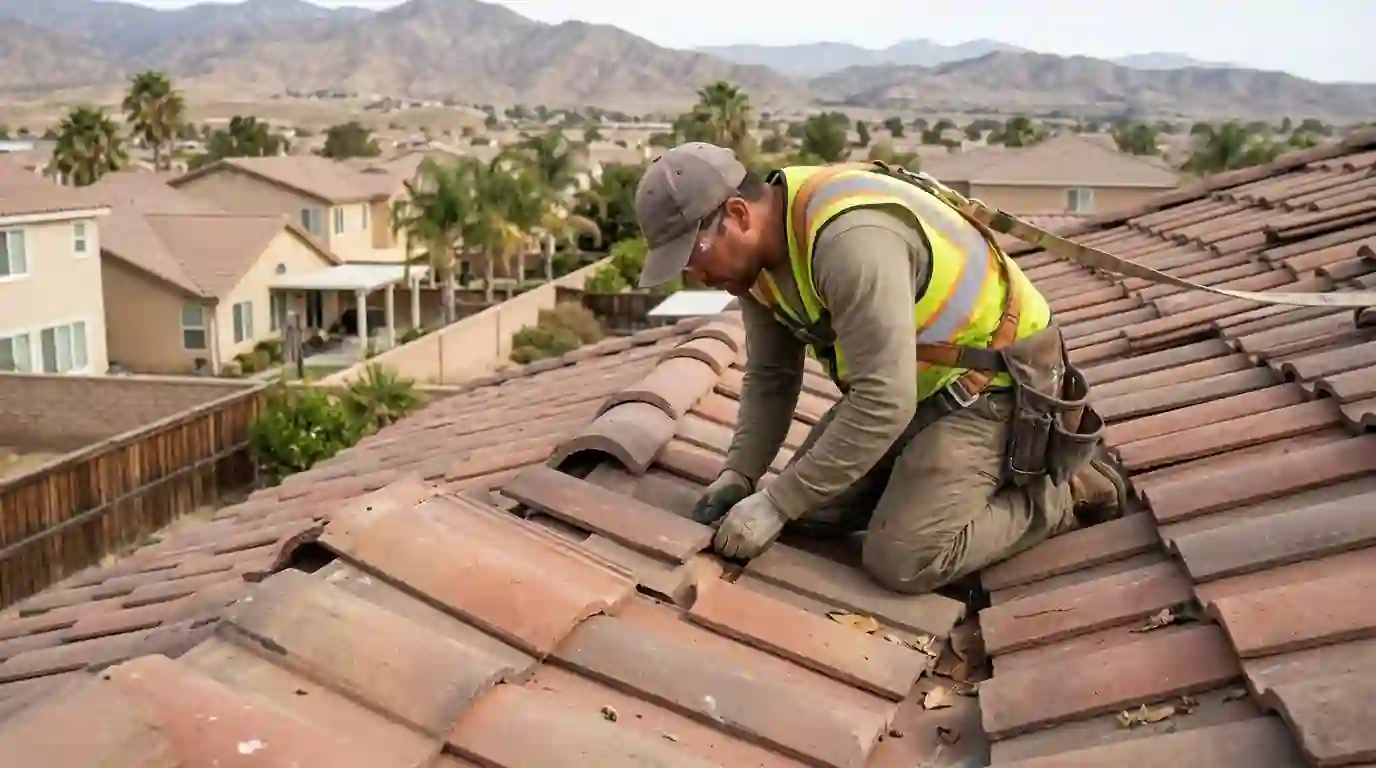
If you find broken tiles, displaced ridge caps or daylight in the attic, call before the next forecast rain. A small repair now costs far less than drywall, insulation and flooring after a storm. If rain is coming within a day or two and the roof has an open area, a tarp is cheap insurance.
When we repair wind damage, we do more than reset the tiles that moved. We add fasteners or approved foam adhesive along the rakes and ridges where code allows, and we replace mortar-set ridges with a fastened ridge system when the ridge has failed.
Making the next wind event less damaging
If your roof is due for underlayment replacement, that project is the best time to bring tile fastening up to current standards. Every tile is lifted anyway, so adding fasteners and clips costs little extra. Pair it with a fastened ridge system and the roof will handle the next Santa Ana season far better.