Tile is not the waterproof layer
It surprises a lot of homeowners: clay and concrete tiles are not designed to be watertight. They shed most of the water and protect what is underneath from sun, but wind-driven rain gets under them by design. The underlayment beneath the tile is the real waterproof layer.
On most Riverside homes built in the 1980s and 1990s, that underlayment is 30-pound asphalt felt, sometimes in a single layer. It was the standard of the day, and it worked well for a long time.
How heat wears it out
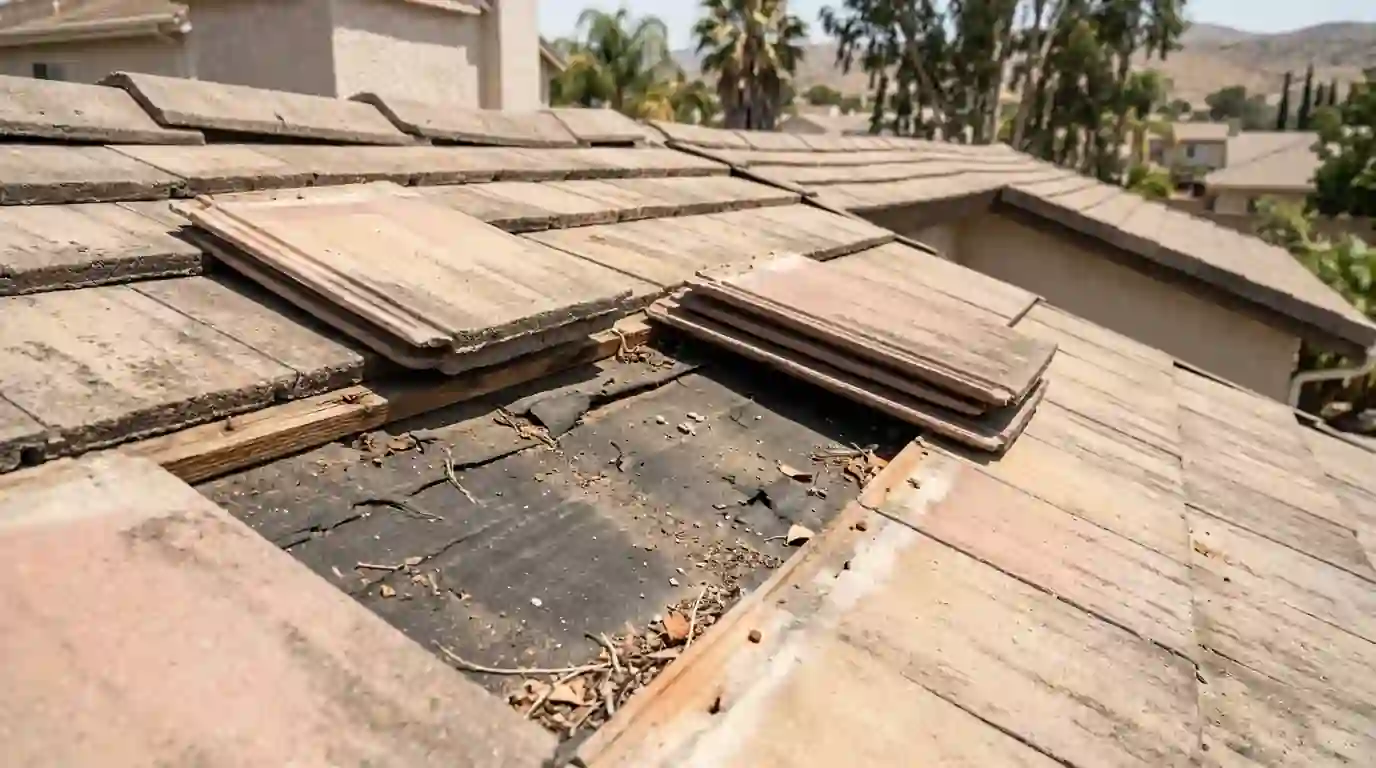
Under a tile roof in the Inland Empire, felt underlayment lives through summer after summer of extreme heat. Over time the oils that keep it flexible bake out. It shrinks, cracks and eventually crumbles to the touch, especially near the eaves and on south and west facing slopes.
Most felt under Riverside tile lasts 20 to 30 years. Once it fails, every bit of water that gets past the tile goes straight to the roof deck, and leaks start showing up in places with no broken tile above them.
Signs your underlayment is done
Leaks after heavy rain with no visible tile damage. Felt that crumbles when you touch it at the eaves or in the attic. Dark stains on the roof deck in the attic. A tile roof installed before about 2000 that has never had the underlayment replaced. Any one of these is worth an inspection.
We confirm by lifting a few tiles in several areas. If the felt is brittle in one spot, it is usually brittle across the slope.
What replacement looks like
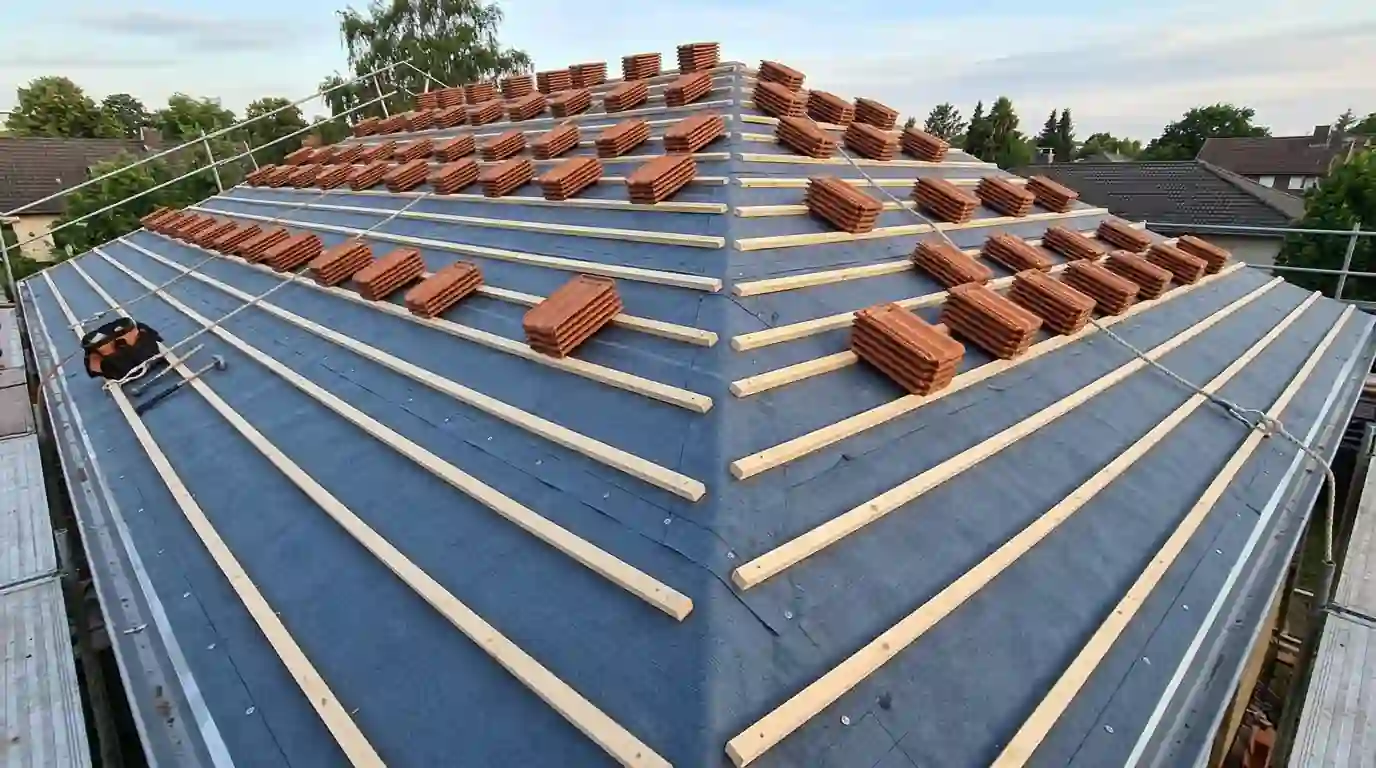
The usual fix is called a lift and relay. We remove the tiles and stack them on the roof, strip the old felt and battens, repair any damaged decking, install new underlayment, flashing and battens, and re-lay the original tiles. Cracked tiles are replaced with matches.
Because the tile is reused, the cost is usually 40 to 50 percent less than a full tile replacement, and you end up with the part of the roof that actually keeps water out brand new. Modern synthetic and two-ply systems are rated to last far longer than the original felt.
Plan it before it becomes an emergency
If your tile roof is past 20 years, an inspection lets you plan the work and budget instead of reacting to a ceiling stain in January. If you plan to add solar, do the underlayment first, so you are not paying to remove the panels later.