How hot an attic really gets
On a 105 degree Riverside afternoon, an attic with poor ventilation can pass 150 degrees. That heat cooks the underside of the roof deck and the shingles or underlayment above it. It also bakes the air ducts that run through most Inland Empire attics, making the air conditioner work harder.
Ventilation: let the heat out
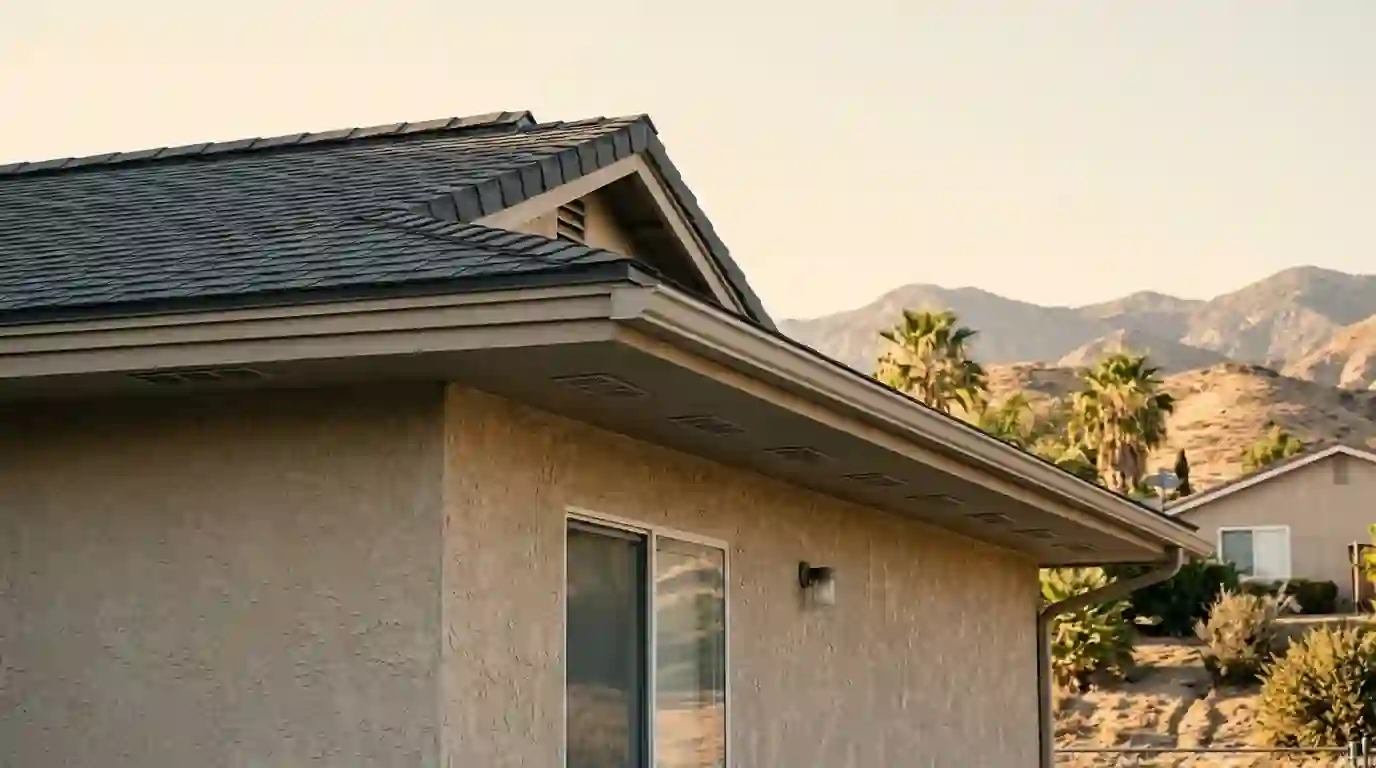
Good attic ventilation pulls cooler air in at the eaves and lets hot air out high, at the ridge or near it. The key is balance. Exhaust without enough intake does little, and mixing exhaust types can make air short-circuit between vents instead of sweeping the whole attic.
A common target is 1 square foot of net free vent area for every 150 to 300 square feet of attic floor, split between intake and exhaust.
Radiant barrier: stop the heat coming in
A radiant barrier is a reflective foil under the roof deck that blocks much of the radiant heat from a hot roof. It works best in exactly our kind of climate, and best of all when ducts are in the attic. It is easiest to add during a re-roof, as radiant barrier sheathing.
Insulation: keep the heat out of the house
Insulation on the attic floor slows the heat that does build up from moving into the rooms below. Many older Riverside homes have far less than today's targets. Air sealing the attic floor first, around lights, pipes and wiring, makes the insulation work better.
What it means for your roof
A cooler attic means a cooler roof deck, and that adds years to shingles and underlayment. When we replace a roof, we look at ventilation as part of the system, not an afterthought.