Why flat roofs fail in the first storm
Flat roofs depend on water draining off them quickly. In Riverside, they spend most of the year baking in sun, which dries out seams, cracks coatings and lets debris pile up at drains and scuppers. Then the first big storm of the season arrives and puts all of that to the test at once.
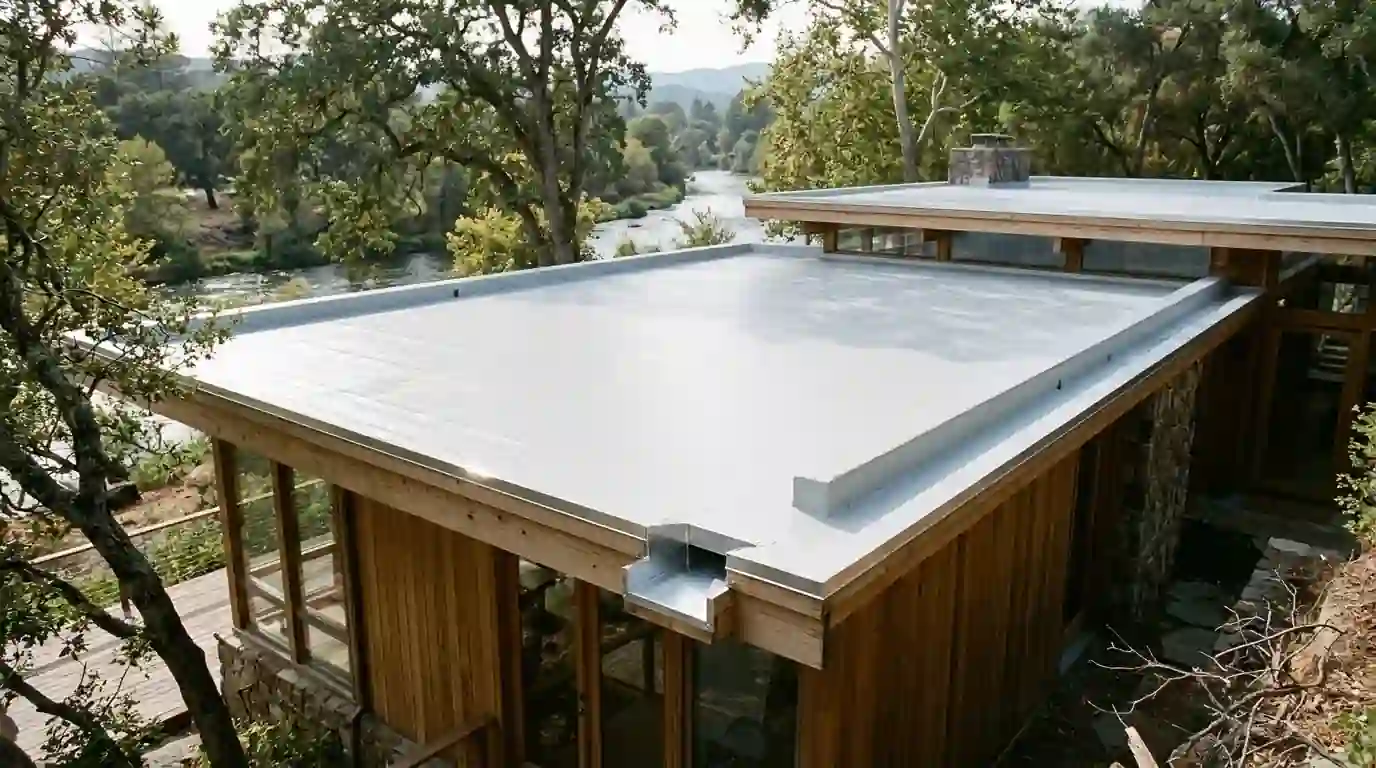
Clear every drain and scupper
A clogged scupper turns a flat roof into a shallow pool. Water backs up under flashing and finds its way inside. Before the rainy season, clear leaves and debris from drains, scuppers, gutters and downspouts. If water still sits in the same spot two days after a rain, the roof needs slope added there.
Check seams, edges and walls
Most flat roof leaks start at seams, at edges where the roof meets metal, and where the roof meets a parapet or house wall. Look for lifted seams, cracked sealant and blistering. On patio roofs, the joint at the house wall is the classic leak point.
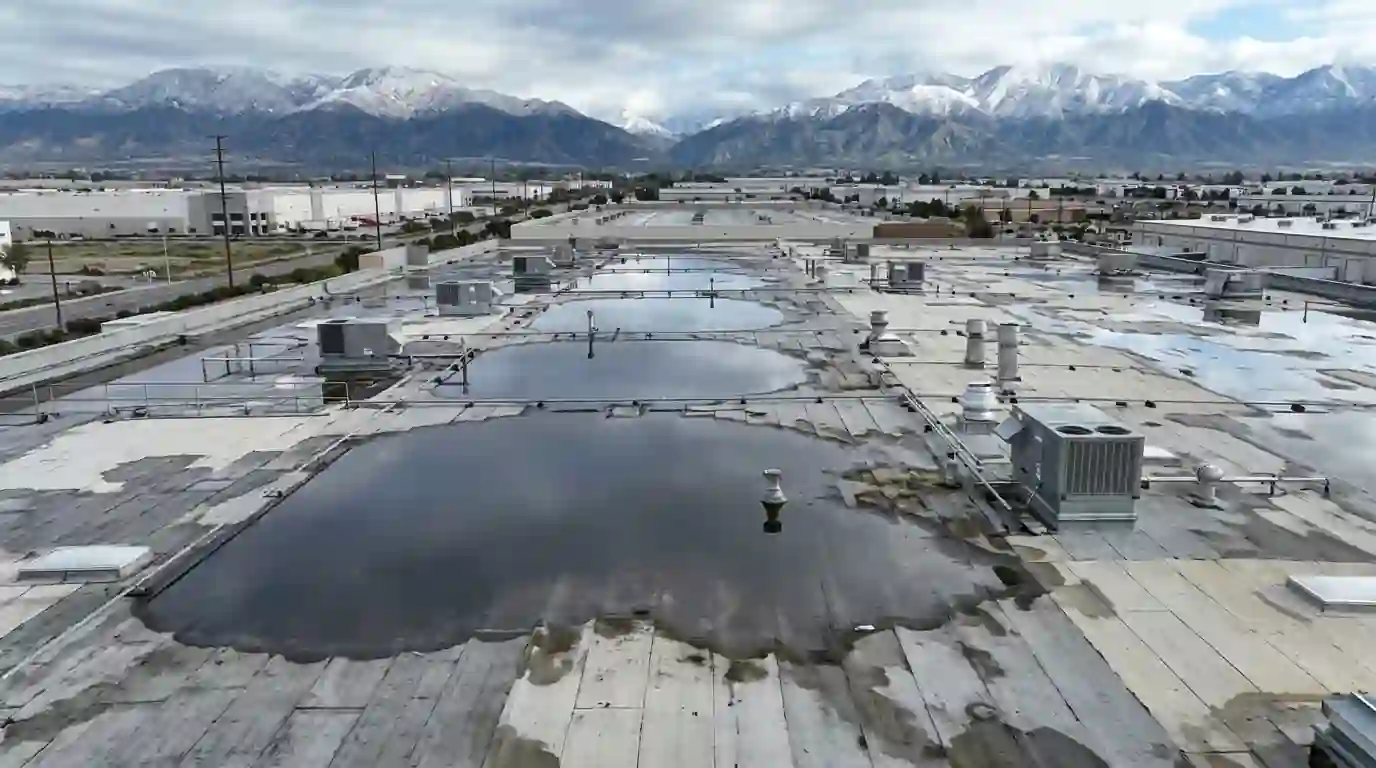
Recoat before it is too late
A reflective coating can add years to a flat roof that is worn but dry underneath. Once water gets into the insulation, a coating no longer helps and replacement is the answer. Late summer and early fall are the best times to recoat, when the roof is dry and nights are still warm enough for the coating to cure.