Why long storms are hard on roofs
An atmospheric river can drop several inches of rain on the Inland Empire over two or three days. Roofs that handle a passing shower can fail under that much water for that long, especially where underlayment is old or valleys are full of debris.
Leaks from long storms sometimes do not show inside until days later, after water has soaked through insulation and drywall.
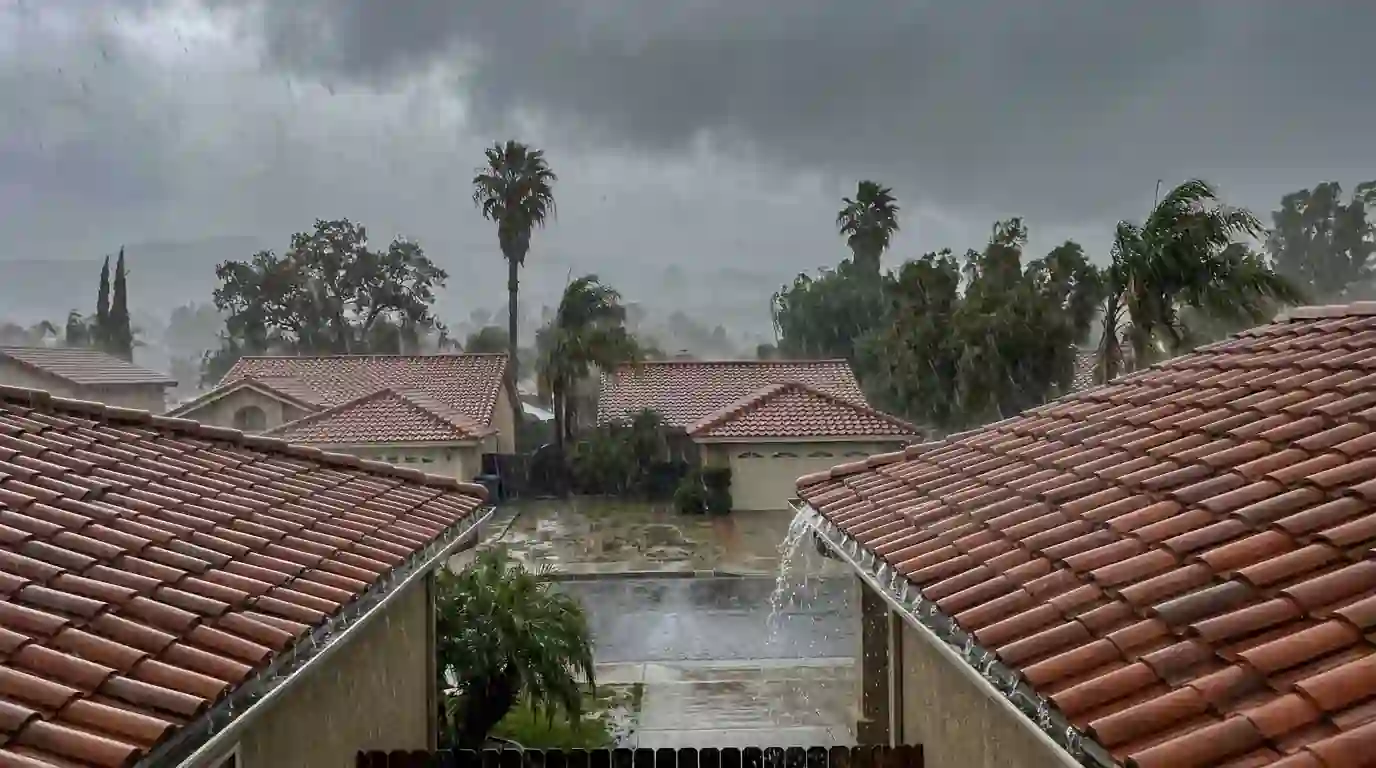
What to check yourself
Walk the house and look at ceilings, especially near exterior walls, skylights and chimneys. Check closets and rooms you do not use often. In the attic, look for wet insulation, damp wood and water trails on the underside of the roof deck. Outside, look for overflowing gutters and erosion below the roof edge.
What a roofer should check
A proper inspection after a long storm covers valleys, flashing at walls and chimneys, pipe boots, skylights, roof-to-roof junctions and the underlayment at a few test spots on tile roofs. It should include the attic. You should get photos of anything that needs attention.
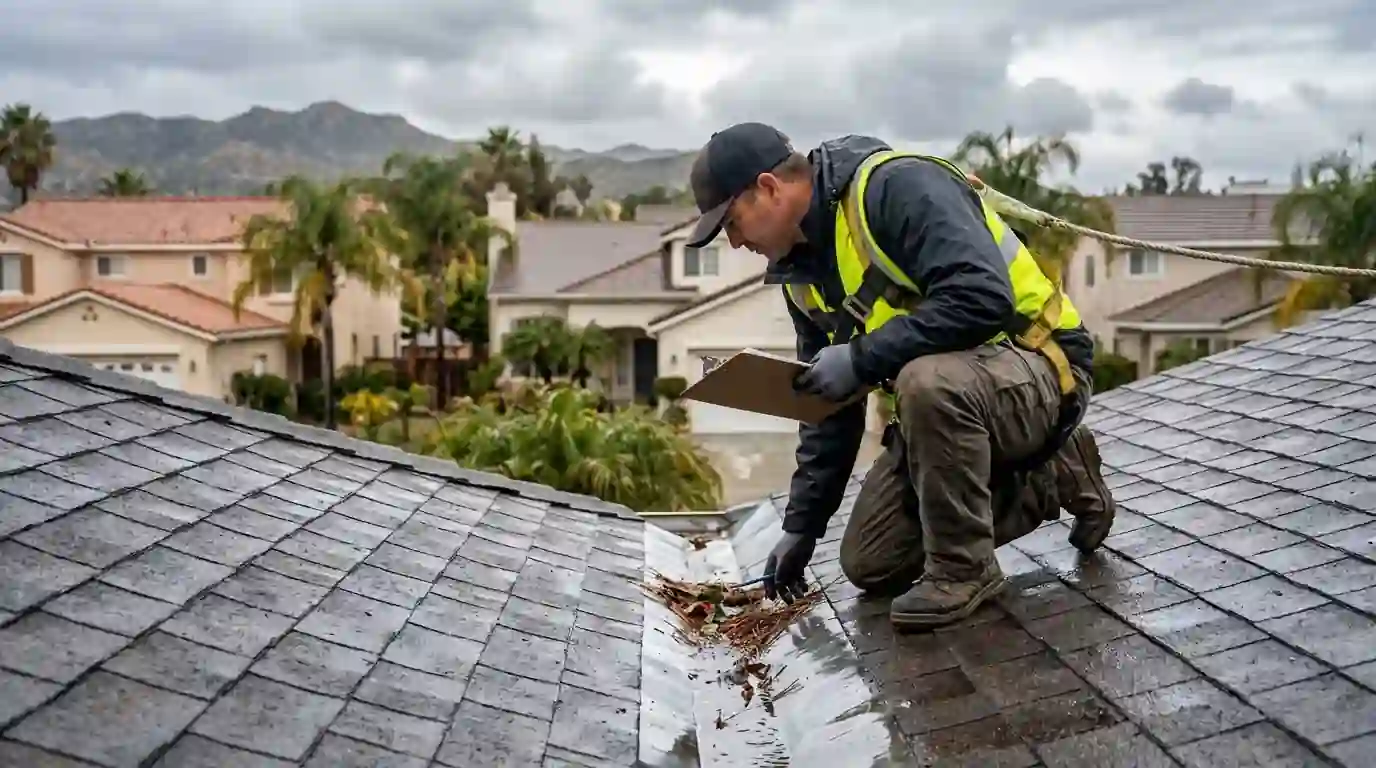
Hidden damage to take seriously
Wet insulation loses its value and can grow mold. Soaked drywall can sag. Wet roof decking can rot if the leak continues. If you find any of these, have the leak repaired and dry out the affected materials quickly. If the damage came from a sudden event, document it for your insurance carrier.