Protect the room first
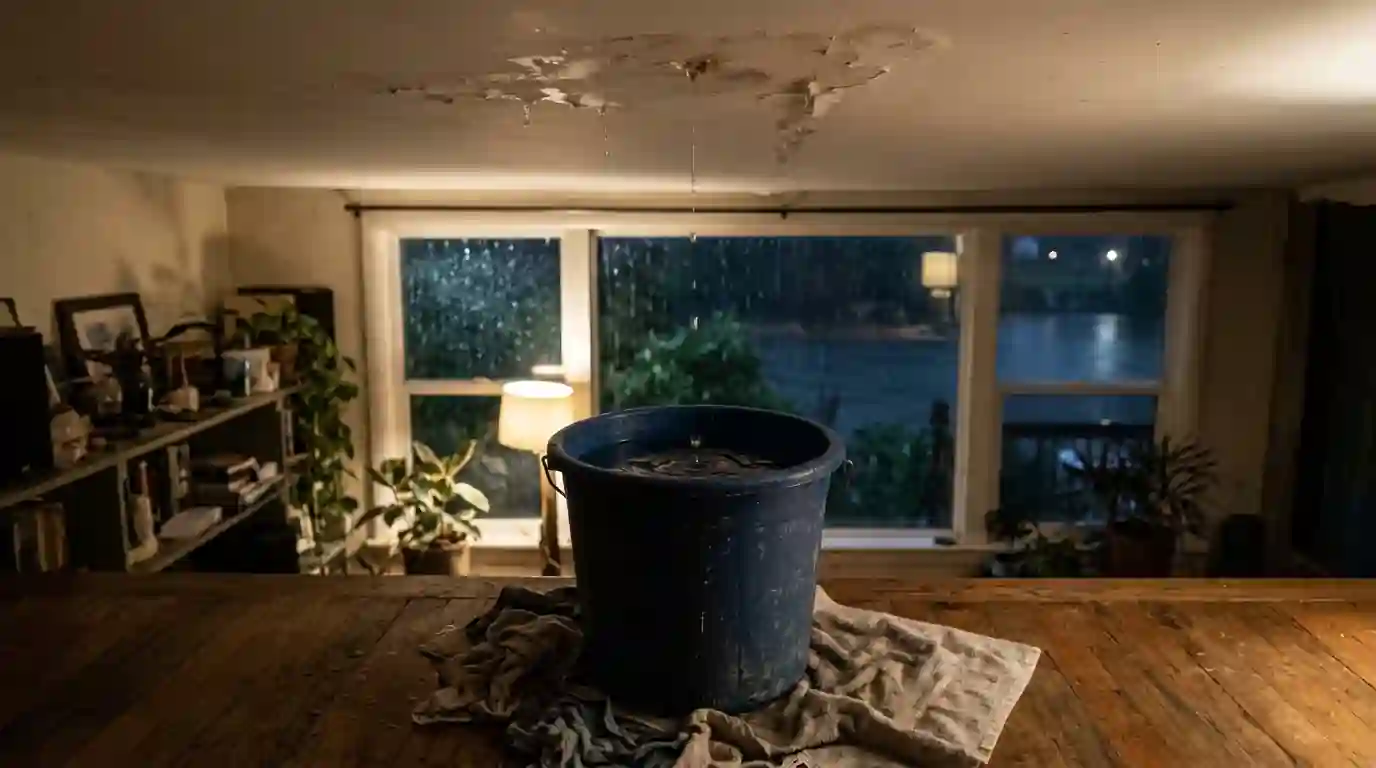
Move furniture, rugs and electronics away from the drip. Set a bucket or tub under it with a towel inside to stop splashing. If water is near a light fixture or outlet, turn off that circuit at the breaker panel.
Watch for a sagging ceiling
If the drywall is bulging with water, it can come down all at once. Put a bucket under the lowest point and poke a small hole with a screwdriver so the water drains in a controlled way. It feels wrong, but it saves the ceiling and keeps water from spreading across it.
Stay off the roof
A wet tile or shingle roof in wind is dangerous, and walking on tile in the rain cracks it. Do not climb up to look. A roofer can tarp the area safely and in a way that does not damage the rest of the roof.
Document it
Take photos and short videos of the leak, the ceiling and anything damaged, with the time visible if you can. If the damage came from a sudden event like a fallen limb or wind, report it to your insurance carrier and keep receipts for emergency work.
Get the leak stopped
Call a roofer who answers at night. The first visit should stop the water with a tarp or temporary patch. The permanent repair waits until the roof is dry, when the underlayment and flashing can be repaired properly.